


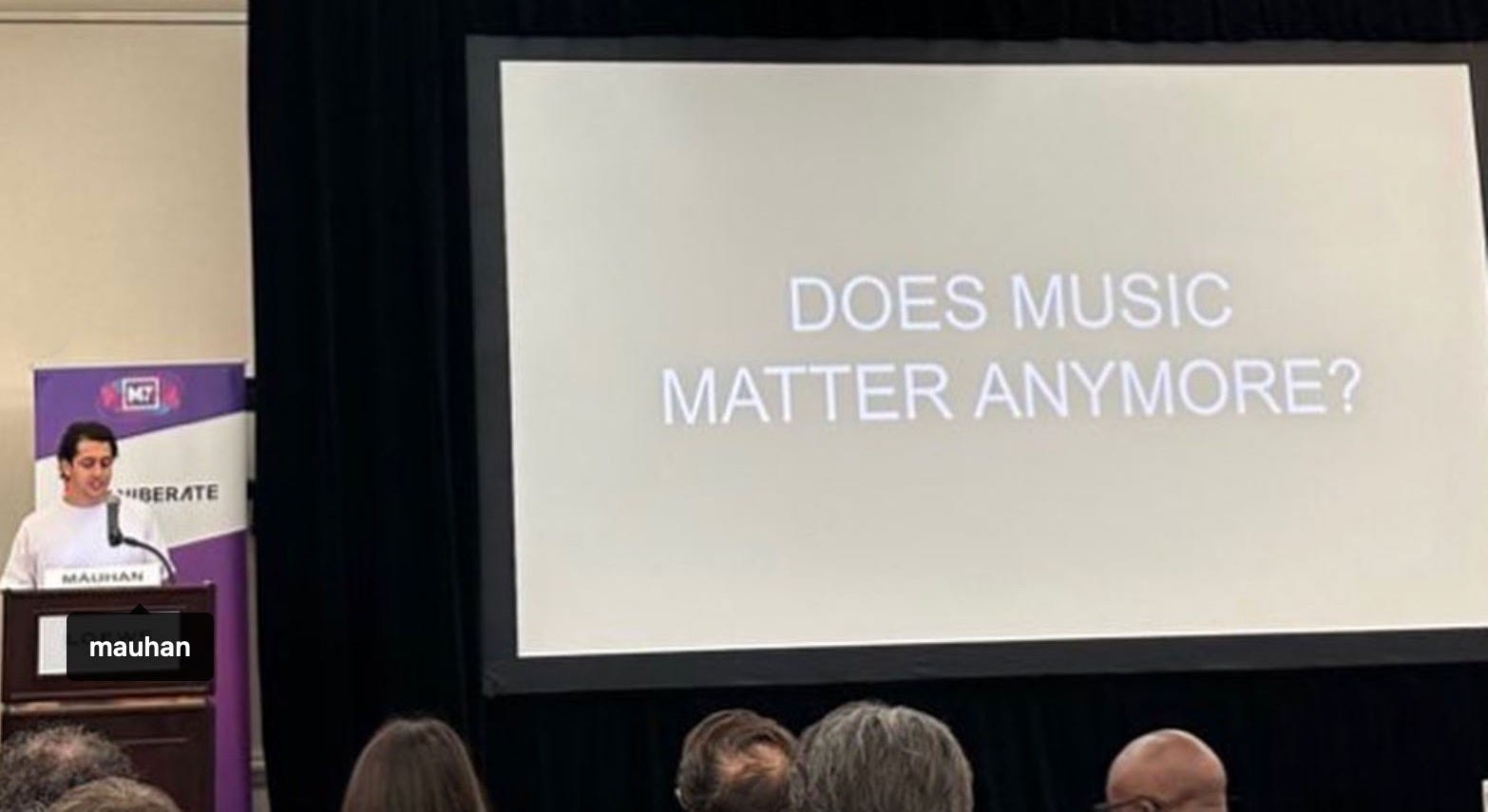
Two years ago today-ish, the dream team at Music Tectonics made the (questionable) decision to have me keynote their annual conference in Santa Monica.
Given the illustrious conference is kicking off again this week, I figured I’d publish my keynote for the very first time - exclusively for the best humans on the internet (Dead.Online subscribers).
I called it Shell Art is Over (fka Future of Music in the New Techno-Cultural Landscape) - and it still feels oddly relevant, even in a post-LLM world. I’ve uploaded a little recap below along with the full video at the end of the post (!).
Bon appétit.
Yesterday
Two years ago I walked on stage at Music Tectonics and asked a room full of music execs the question no one wanted to hear: Does music matter anymore?
I did it partly for the chaos, partly because it was true.
For most of my life, music was my culture. It built my operating system. It shaped the slang I used (tight), the clothes I wore (baggy), the scenes I joined (mid-rise). Even the drugs I other people took were weirdly genre-specific.
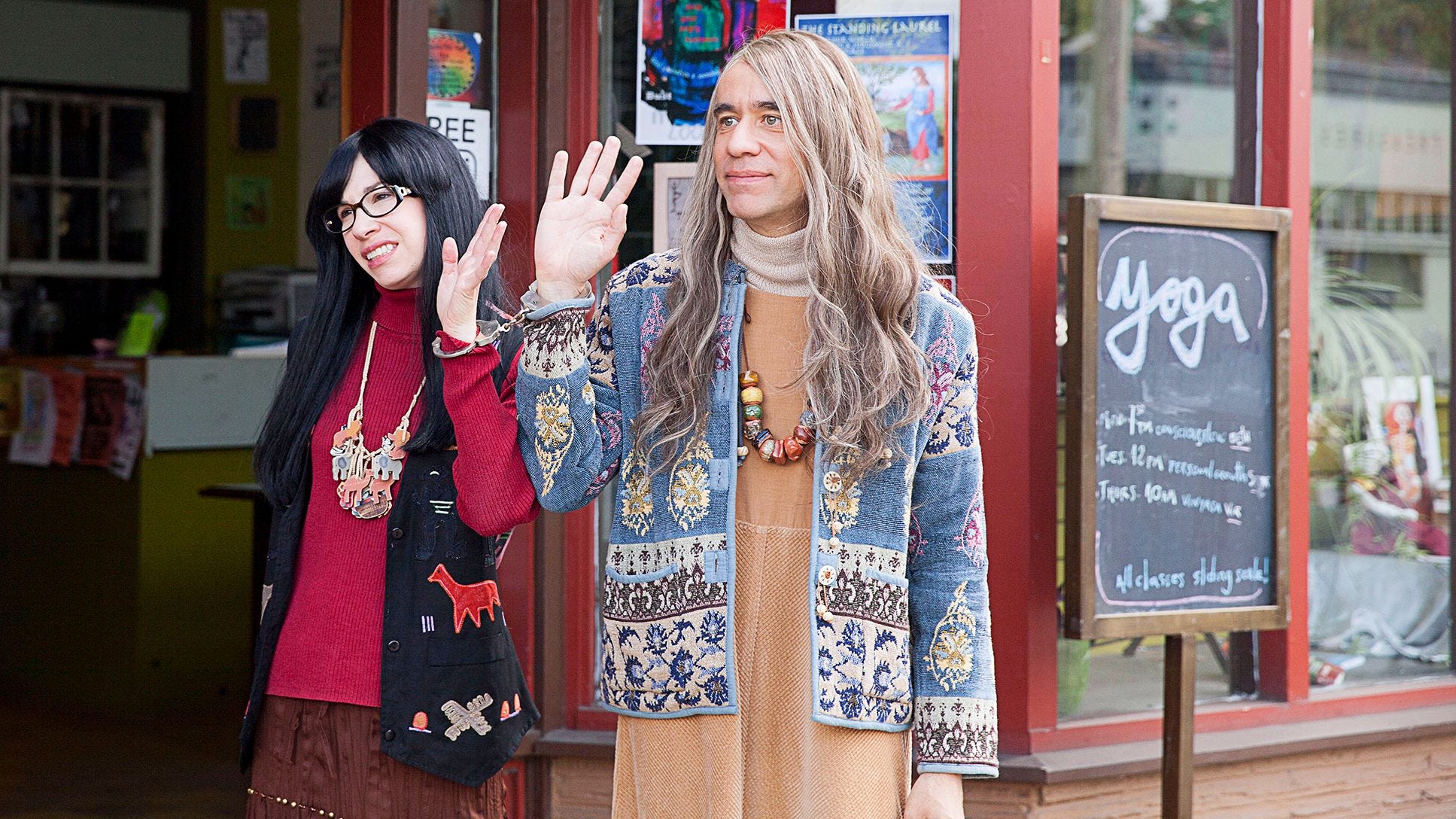
See, I grew up in ‘90s Portlandia (aka Brooklyn before Brooklyn was Brooklyn). Grunge, punk, rap (and weirdly, R&B) raised me. Kurt and Pac wired me with anti-conformist code. Pop was sellout. If genpop liked it, I couldn’t. (I still can’t).
Music really fucking mattered to me. And everyone else. It wasn’t streaming wallpaper. It was a cultural blueprint. It led everything else in culture… Until it didn’t.
Somewhere along the way, the center of gravity shifted. Music’s signal got weak. Perhaps because the things that now define youth culture - gaming, social, interactive worlds - were all built natively for the internet.
Music just… wasn’t.
Today
Video killed the radio star, then technology killed everything else.
Each generation of hardware reshaped music: vinyl limited song length, radio refined it, MP3 players shrunk it. Every new pipe dictated the form that flowed through it.
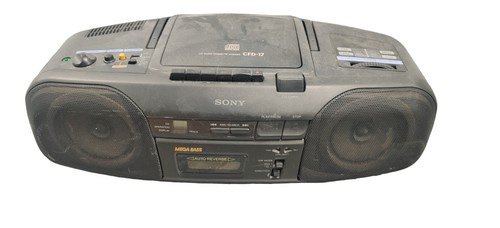
But then the concept of a “device” changed. My Sony boombox became the Playstation, and the Playstation became the iPhone - machines built for touch, interaction, play. And the medium that mastered that design language wasn’t music. It was gaming.
Gaming isn’t just entertainment - it’s the new social fabric. A multiplayer identity machine. It prints culture in real time. 80% of Gen Z plays games (and average over 7 hours per week). 30% discover new music inside those games. The disco became the Discord. The club became the stream. The record store became the open world. And gaming eclipsed the combined box office and recorded music revenue years ago.
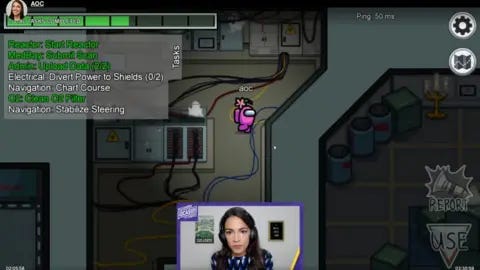
Of course, we noticed. We followed the money. Brands dropped gamer collabs, artists streamed in Fortnite, politicians played Among Us for votes. We gamerbait’d hard.
And to be fair, there’s brilliance in that. Fortnite concerts hit a ~bazillion viewers. Esports sponsorships outpaced major sports. But underneath, an unspoken truth formed: gaming, not music, became the world’s most participatory art form.
Over the years, while music adapted to survive, gaming evolved to lead.
Tomorrow
But here’s the flaw in our thinking: gaming isn’t the pipe; the internet is.

The internet is the cultural bloodstream, the infrastructure everything now flows through. Gaming is just one of the liquids in motion - music is another.
The real question is: what does music look like when it’s designed for the internet itself? For communities, participation, and belonging.
When music went digital, we lost that connection. We traded ownership and identity for frictionless streams. No more liner notes. No more collections. No more “I was there.” Music became content, and “indie” became a playlist instead of a movement.
Concerts still give us that feeling - sweat, soul, contact highs - but they don’t scale. Not at internet scale. Not like gaming and social media.
So, what’s the path forward?
Day After Tomorrow
We already see blueprints everywhere.
TikTok turned music into a participatory language - covers, dances, duets, remixes. VTubing reimagined performance as identity play. Web3 experimented with ownership and fan investment. Midjourney and now Sora hint at a world where anyone can make something from nothing - synthetic media as creative liberation.
It all points toward the same truth: music’s next chapter isn’t about distribution. It’s about interaction. About participation. About play.
How Music will Win Culture (Again)
For decades, music led culture. Then gaming took the torch. If we want it back, we have to redesign our design principles.
Design for the internet, not for games. Make it fun, playful, and native.
Redefine culture as participation. Ownership, creation, and community are day 1 primitives.
Design band T-shirts. In other words, design for belonging - moments and products that say I was there.
(It’s that simple and that hard).
Two years later, I still can’t tell you where this all lands. But I still can tell you one thing with absolute certainty:
Watch
Enjoy!
/m
"gaming isn’t the pipe; the internet is" - happy someone said it
gaming doesn't (and increasingly won't) need the recorded music industry and fighting to build its future in an environment where it's a "nice to have" simply will not work
Boom