


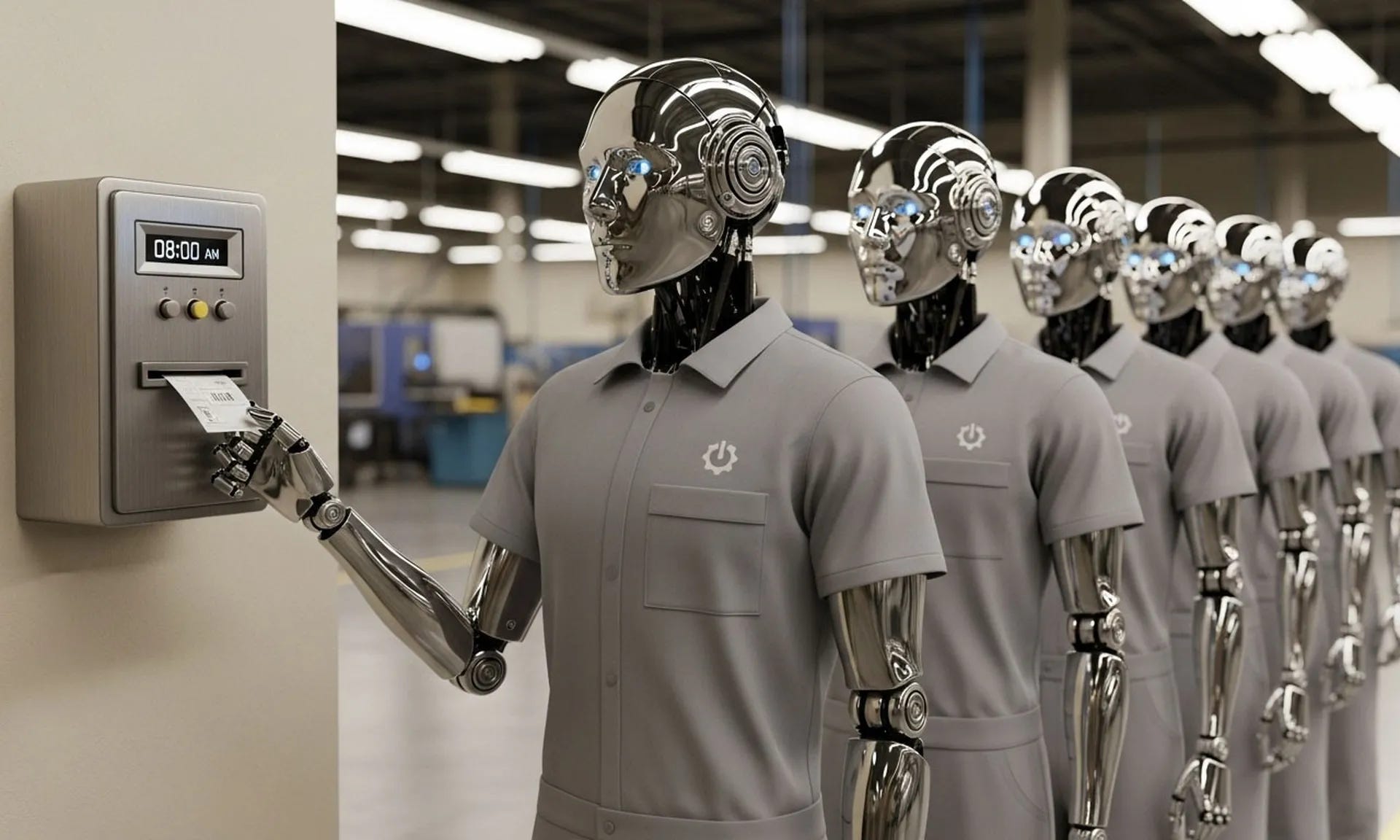
Your next job interview won’t be about you. It’ll be about your agents.
Six years ago, I had Dennis Mortensen on my podcast, Same Same but Tech, and asked him what happens when AI gets good enough to do the boring parts of work.
This was before GPT-3, before Chat Daddy, before the stack of assistants we casually keep open in tabs all day. Back then, “AI” still mostly meant Siri and Netflix recommendations. Dennis’s company, x.ai, felt like magic because an assistant named Amy could sit on an email thread and handle the calendar ping-pong for you.
(Yes, he owned the x.ai domain pre-Elon).
During our conversation, Dennis described the future via the lens of a job interview - one where you wouldn’t just talk about your career history, but about the agentic tools you’ve built and would bring along with you. Your very own army of agents.
He put it like this:
“The next job interview that somebody will have in eight years from now will not just be one where you provide your typical CV. You will also tell a story about, ‘It’s not just me that you hire. It is me and 11 agents that I’ve been training over the last five years.’”
At the time, it sounded abstract. Now, it feels inevitable.
People are training systems on how they write, how they code, how they think. Little loops that draft before they draft, summarize before they read, research before you even know what question you’re asking. The boundary between what you do and what your agents do is already gone. More and more of our jobs look like directing, editing, and deciding what to keep.
And now, with things like Open Claw and Perplexity Computer, the human isn’t just “assisted,” they’re optional.
We don’t prompt anymore. We delegate. These AI systems search, browse, daisy-chain actions together, and report back via text message. The work doesn’t wait for you to do it. It starts without you.
We’re quickly evolving from using tools to managing personal workforces.
Before all this, your résumé used to be a record of what you’d done. Now it’s a measure of leverage. Two people can look identical on paper – same background, same experience – and operate at completely different scales depending on the agentic workforce they’ve built around themselves.
Back in 2020, my reaction to all of this was simple: I hate chores. Chores are the worst. Let the machines handle email, scheduling, admin. That felt like the obvious trade.
What’s less obvious now is where that line is.
Because the systems aren’t just handling chores anymore. They’re thinking. Deciding. Executing in ways that start to bleed into the parts of the job we used to think of as ours.
The jobs aren’t disappearing. They’re dissolving.
And once that happens, the question shifts. Not “what can I automate?” but “what exactly is there left for me to do?”
Because, fuck, if an AI wants to do all my work, it can. I’m more interested in what’s left after that.
More on this soon. In the meanwhile, listen to the full episode of Same Same but Tech on Spotify or YouTube.
/m
H/t: Me for not saying “I told you so” once in this entire essay.
Can my job be "to feel"? If A.I. can do the rest, I'd love that task on.